The Importance of AGV Safety in Industrial Environments
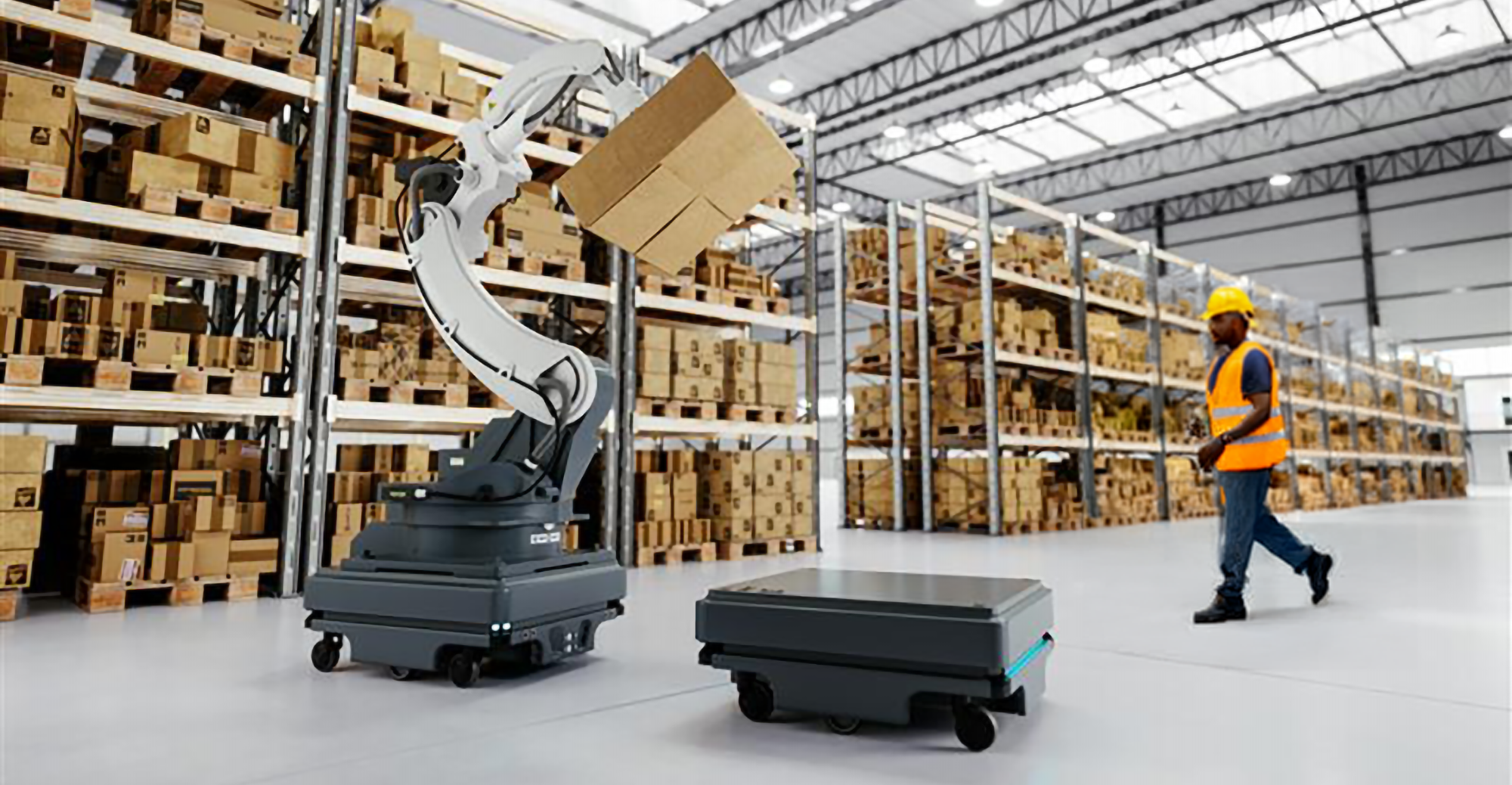
With the increasing adoption of AGVs in the industrial sector worldwide, ensuring their safe operation is paramount. These autonomous vehicles often share spaces with human workers, making safety a critical factor in maintaining a productive and accident-free workplace. AGV manufacturers must stay vigilant in designing and upgrading vehicles to meet the latest safety standards in a competitive market.
Regulatory Compliance and Safety Standards
European Directives, particularly the Low Voltage Directive (LVD) and Machinery Directive (MD), enforce compliance with normalized safety standards. LVD focuses on electrical safety, while MD encompasses broader safety requirements, including essential safety features and risk reduction strategies. Compliance with these standards not only ensures legal adherence but also enhances reliability, market access, and overall trust in the safety of AGVs.

Applicable standards
The most applicable normalized standards under them would be:
- ISO 3691-4:2020: This is the key standard for AGV safety in Europe, covering driverless industrial trucks and their systems.
- EN 16307 is a European standard that provides supplementary safety requirements for industrial trucks, including AGVs. This standard is designed to work in conjunction with other standards, such as EN ISO 3691, to ensure comprehensive safety coverage for industrial trucks in various operating conditions.
- EN 1175 series is a European standard suite specifically focused on the electrical and electronic safety requirements for industrial trucks, including those used in AGV systems.
- EN ISO 13849: This standard pertains to the safety-related parts of control systems, defining performance levels (PL) from PL a to PL e required for different safety components.
- EN 60204-1:2018 is a European standard that addresses the safety of machinery concerning the electrical equipment of machines. This standard is essential for ensuring that machinery operates safely within industrial environments, including AGV.
- ISO 61508: is a widely adopted international standard for functional safety of electrical/electronic/programmable electronic systems (E/E/PE systems) in safety-related applications. The standard provides a framework for ensuring the safety of these systems by defining a Safety Integrity Level (SIL) classification system.
- EN 12100:2010 This standard outline general principles for risk assessment and risk reduction.
Safety Integrity Level (SIL) and Performance Level (PL) in Functional Safety
The Safety Integrity Level (SIL) and Performance Level (PL) are two related but distinct concepts in the context of functional safety, as defined in the international standards ISO 13849-1 and IEC 61508. SIL is a measure of the probability of a safety function failing to perform its intended safety function, while PL is a measure of the performance of a safety function in terms of its ability to detect and respond to faults. In other words, SIL is concerned with the reliability of the safety function, while PL is concerned with the effectiveness of the safety function in preventing or mitigating the effects of a fault. These two concepts are crucial in ensuring the safety of complex systems, such as industrial automation, transportation, and healthcare, where the failure of a safety function can have severe consequences.
PLr and PL (From ISO 13849-1:2006)
|
Performance Level (PL) |
Probability of Dangerous Failure per Hour (PFHd) 1/h |
| a | ≥10-5 and <10-4 (0.001% to 0.01%) |
| b | ≥3 × 10⁻⁶ and <10-5 (0.0003% to 0.001%) |
| c | ≥10-6 and <3 × 10⁻⁶ (0.0001% to 0.0003%) |
| d | ≥10-7 and <10-6 (0.00001% to 0.0001%) |
| e | ≥10-8 and <10-7 (0.000001% to 0.00001) |
SIL Levels According to IEC 61508/ IEC 61511
|
SI Safety Integrity Level |
PFDavg Average probability of failure on demand per year |
RRF Risc Reduction Factor |
PFDavg Average probability of failure on Demand per hour |
| SIL 4 | ≥10-5 and <10-4 | 100000 to 10000 | ≥10-9 and <10-8 |
| SIL 3 | ≥10-4 and <10-3 | 10000 to 1000 | ≥10-8 and <10-7 |
| SIL 2 | ≥10-3 and <10-2 | 1000 to 100 | ≥10-7 and <10-6 |
| SIL 1 | ≥10-2 and <10-1 | 100 to 10 | ≥10-6 and <10-5 |
Safety System Development Process
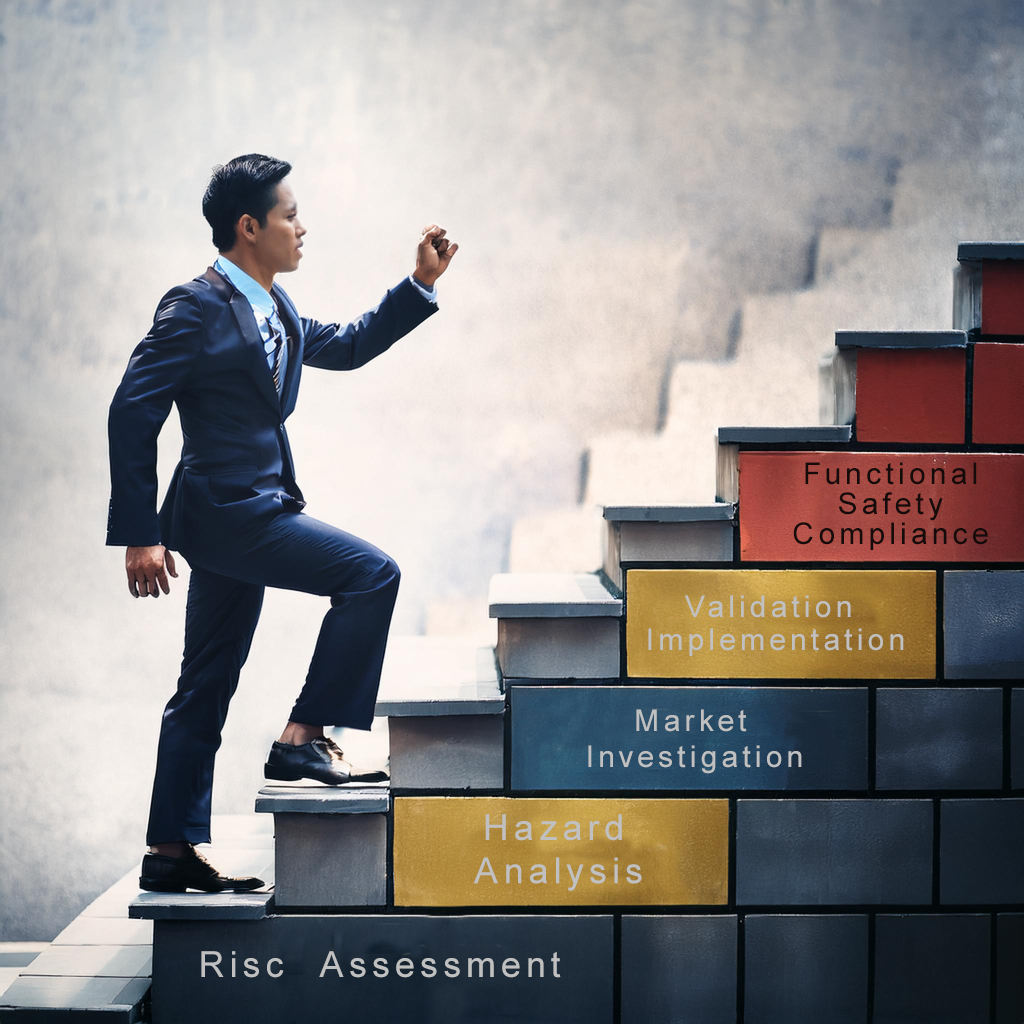
Developing a safety system involves several critical steps, ensuring the system meets safety goals, complies with industry standards, and enhances market competitiveness:
- Hazard Analysis, Risk Assessment, and Standards Identification:
Analyze the hazards associated with the application(s) and assess the risks to determine the required level of safety (safety goals). During this step, identify the specific industry standards and regulations that the safety solution must comply with. - Market Investigation of Compliant Solutions:
Research and evaluate the available safety solutions that align with both the safety goals and the identified standards. Ensure that the potential solutions are capable of meeting the required compliance criteria. - Pre-evaluation of Safety and Standards Compliance:
Assess the safety level of the proposed solution(s) and ensure they meet the necessary safety standards before proceeding with implementation. This step involves verifying that the solutions not only address safety requirements but also adhere to the applicable standards. - Implementation and Assembly:
Assemble and implement the selected safety solution(s), following the guidelines and requirements outlined by the relevant standards. Ensure that all components are installed and configured correctly to meet both safety and compliance objectives. - Validation of Implementation and Compliance:
Conduct a thorough validation of the implemented safety solution(s) to confirm that they meet the defined safety goals and comply with the identified standards. This may involve testing, inspections, and other verification activities. - Reporting and Certification Process:
Document the entire process, including the hazard analysis, risk assessment, solution implementation, and validation outcomes. Prepare and submit the necessary reports for certification to demonstrate that the safety solution complies with all relevant standards and regulations.
Roboteq Safety Solutions
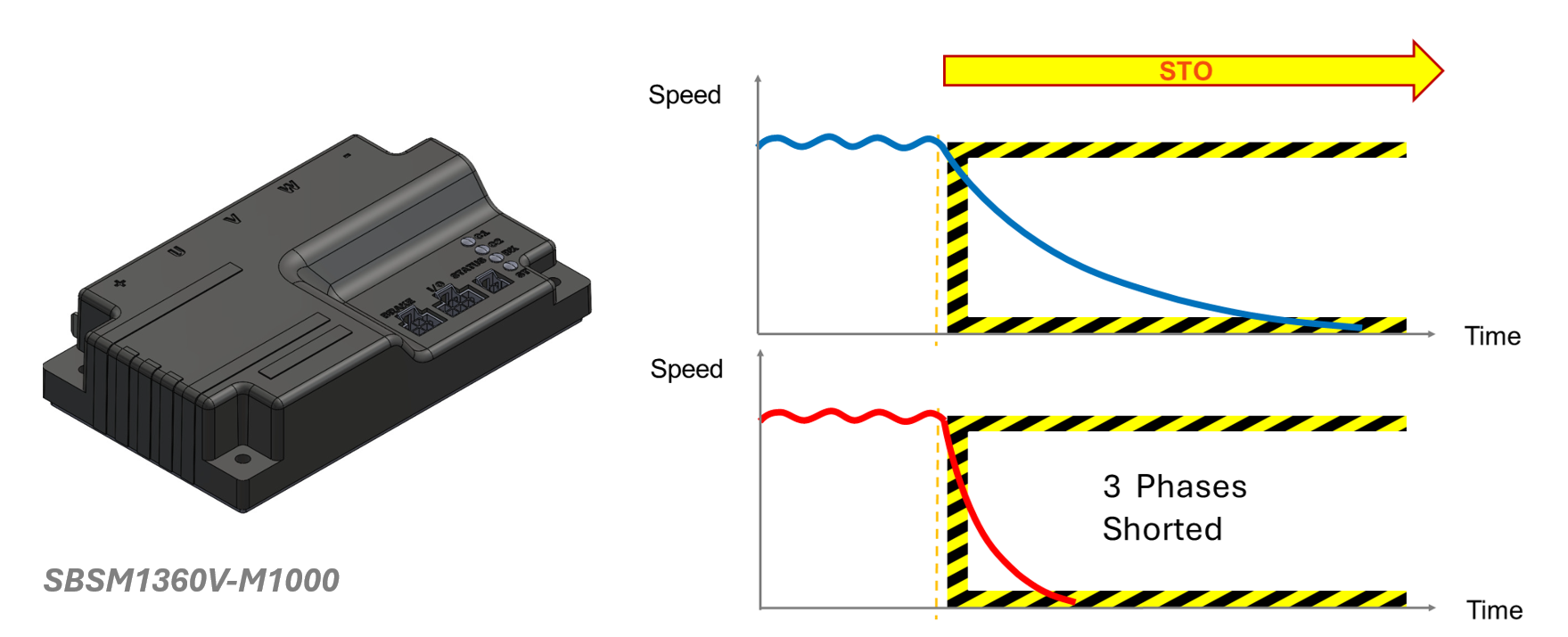
Roboteq stands out as a leading provider of drive solutions, offering critical safety products for AGVs. Our Safe Torque Off (STO) implementation, certified under IEC EN 61800-5-2, achieves SIL 3 Cat 3 PL e across multiple products, including the latest RoboG4® series. We also offer the Safety Brake Switch (SBS), delivering two safety function:
- Dynamic Braking (Safety-rated three-phase short)
- Motor Brake Control (MBC)
Both enhancing AGV safety by ensuring rapid and reliable vehicle halting, compliant with ISO 13849 Cat 3 PL d.
Incorporating these advanced safety solutions ensures that your AGVs not only meet regulatory requirements but also operate with the highest safety standards, safeguarding both workers and the industrial environment.
General Safety Requirements
While Roboteq provides critical safety solutions for AGVs, there are additional safety measures that manufacturers and integrators need to consider to build a compliant and robust safety-rated system. These requirements go beyond our scope but are essential for ensuring the overall safety and reliability of AGVs in industrial environments. Here are some general safety requirements that every AGV manufacturer should take into account:
- Overall Control System: This includes a safety PLC to manage and coordinate all safety functions.
- Sensor Technology: Safety sensors are used for obstacle detection and monitoring safety loops to ensure the vehicle operates within safe parameters.
- Physical Safeguards: Mechanical designs provide physical barriers and protective measures to prevent accidents.
- Environmental and Operational Safety: This considers the surrounding environment and operational conditions to ensure the system adapts and remains safe, regardless of external factors.
- Power Supply and Cable Management: Proper handling of power supply and cable management is crucial for maintaining system integrity and preventing issues such as electrical interference (EMI), which can compromise the safety system's reliability.
- Additional Components: Depending on the specific application, other safety components may be required to meet the necessary safety standards and ensure comprehensive protection.These are tasks that need to be performed by the AGV manufacturer/integrator and Roboteq can not assist with these.
IFA SISTEMA
For engineers looking to implement and assess safety within their AGV systems, the IFA SISTEMA tool is an invaluable resource. Developed by the Institute for Occupational Safety and Health of the German Social Accident Insurance (IFA), SISTEMA is designed to evaluate the safety integrity of individual safety functions as well as the overall safety of the system.
To facilitate the evaluation process, Roboteq has developed a comprehensive SISTEMA library. This library includes Roboteq products equipped with safety-certified functions, allowing users to efficiently assess and ensure that their systems meet the highest safety standards. By using Roboteq’s advanced solutions in conjunction with the SISTEMA tool, manufacturers can streamline the process of achieving compliance with safety regulations and standards.
Download the SISTEMA Tool Engineers can download the SISTEMA tool from the following link:

Roboteq SISTEMA example
By importing our library to SISTEMA and setting up a simple Project with a simple safety function, we can evaluate a combination of FBLG2360T STO function coupled with the SBS (Safety Brake Switch) and we can identify the safety level of a system that is comprised of these two elements.
To create a new project, we need to just press new. Then name the project as desired. Then add a Safety Function and name it as desired.

To import the Roboteq library first download it from Roboteq's Files Downloads section.
Then to get the library into the library database, we need to select library->Add local library and then find the Roboteq Safety Features file and select Open.
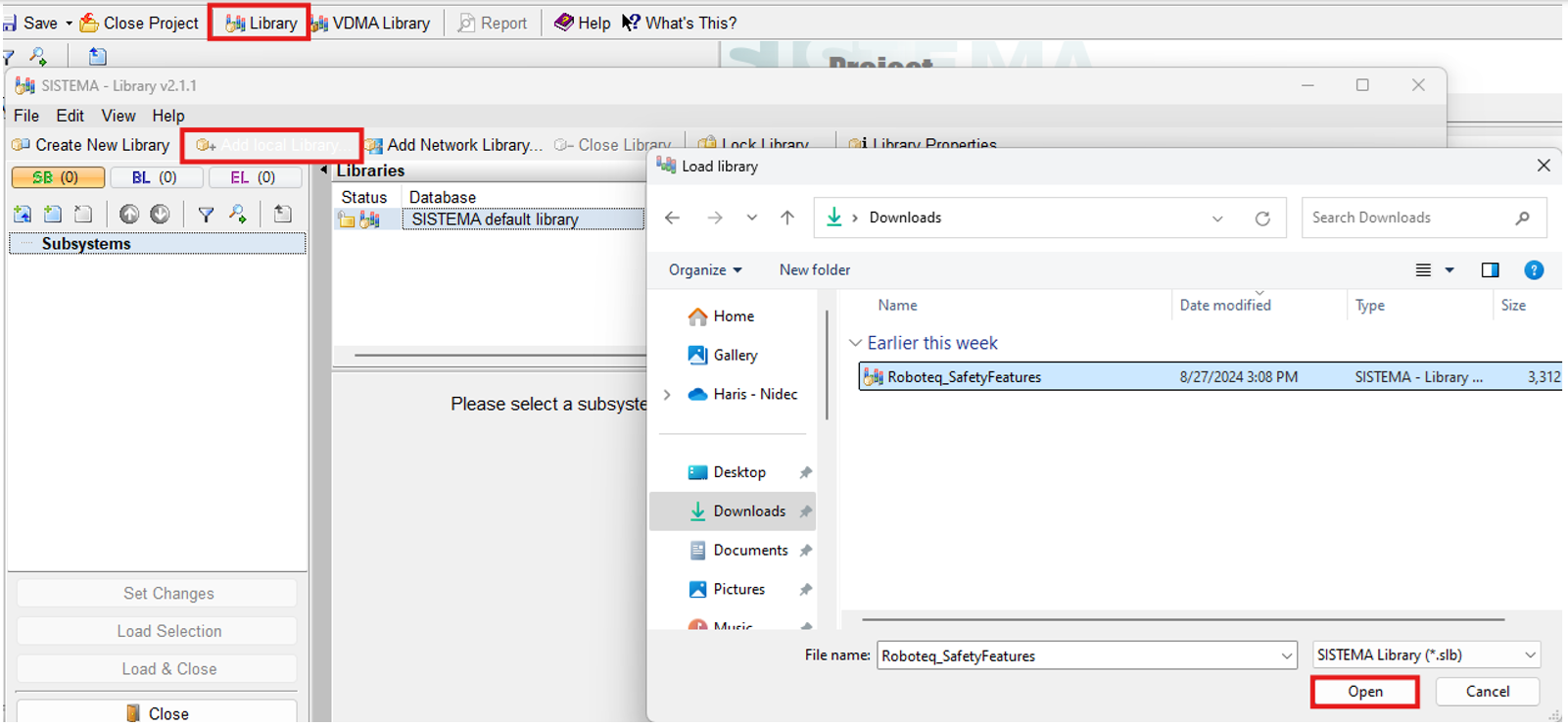
This will add the library to the list of libraries.
Now you should be able to see the Roboteq_SISTEMA_SafetyFeatures library and the subystems on the left side of the libraries window. All the information regarding PL will appear on the lower left side of the window.
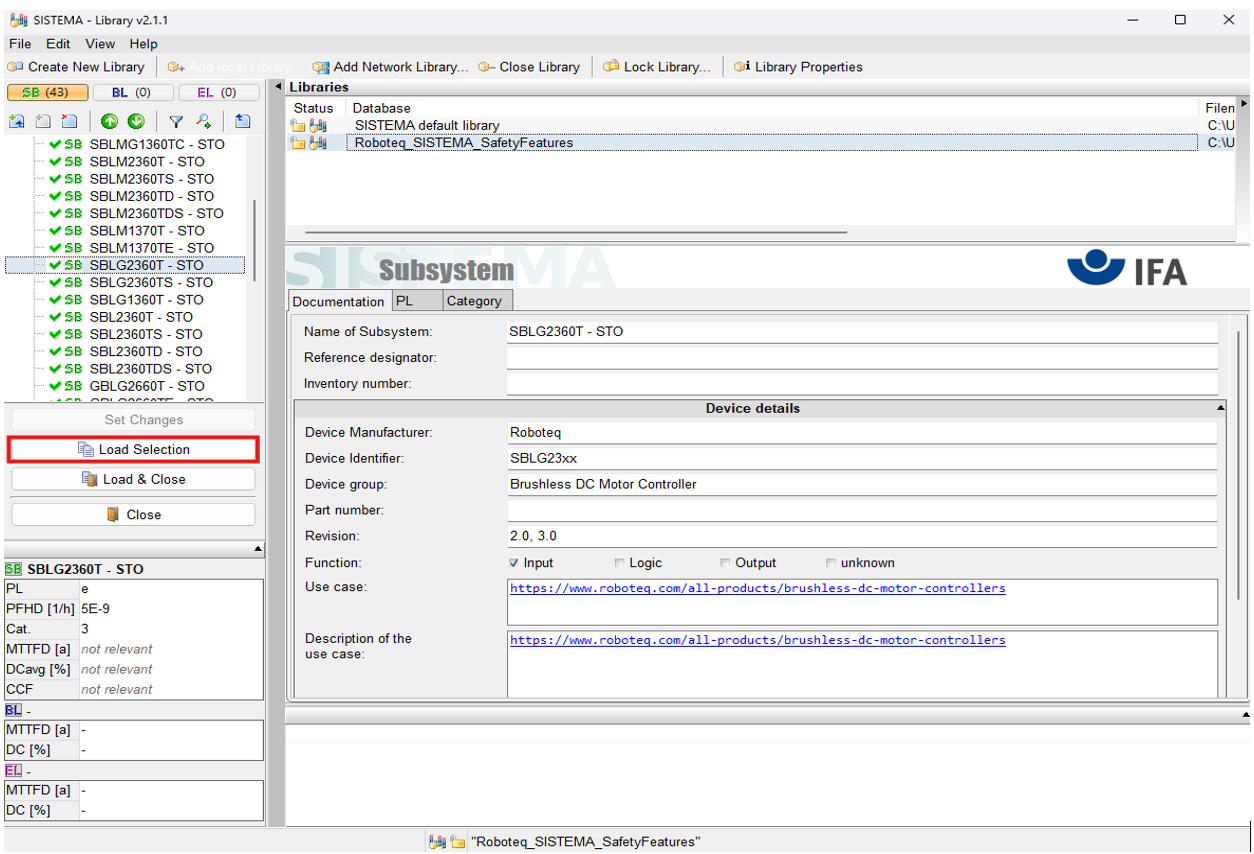
To load a safety subsystem from the library select the desired one and press load selection.
After loading the subsystems into the Safety function we can check the total PL rating of the safety function from the used subsystems, as well as the desired safety PL. We have set the Safety Function to be rated as PL d since we expect to conform with the lowest PL level which the two elements have. FBLG2360T – STO is PL e and SBS is rated at PL d.
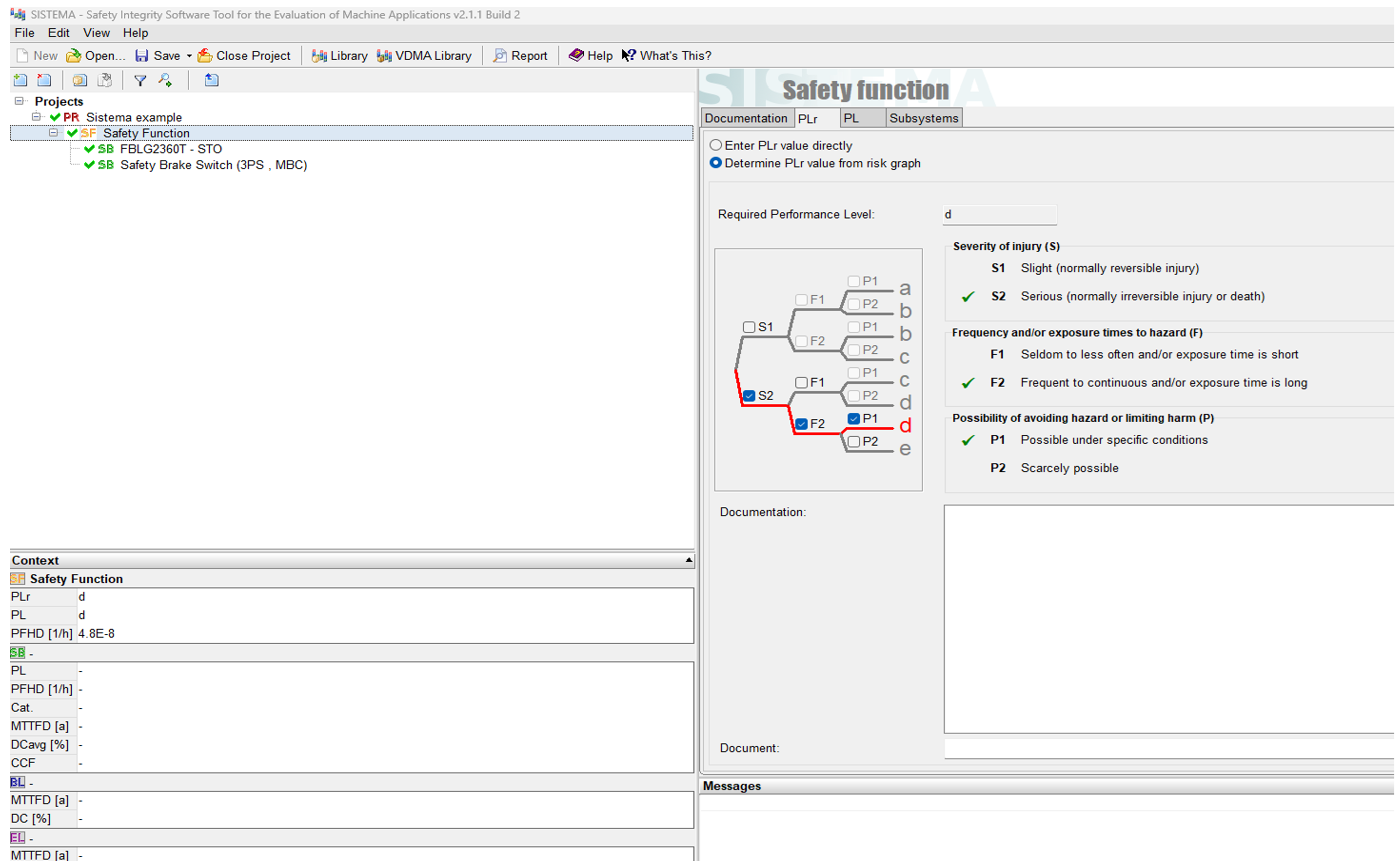
The Safety PL we chose can be seen on the right side while below context we can see the PLr(requirement) and the PL of the system using FBLG2360 STO function and SBS.
We hope this article serves as a valuable starting point on your journey toward enhancing safety in your AGVs.